Who Sweeps When the Leaves Come Down? A Muswell Hill Pavement Audit
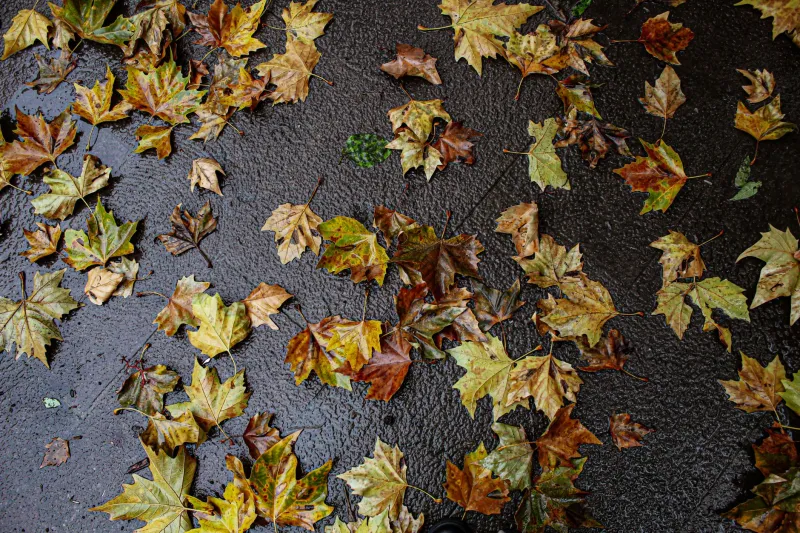
On 8 November 2026, the pavements of Muswell Hill are doing that familiar autumn thing: half golden carpet, half slip hazard. The plane trees have done their annual shed, the gutters are full, and somewhere between the bus stop and the bakery there is always a patch of wet leaves waiting to humble a confident stride.
It is easy to treat leaf fall as background scenery. But on a high street like ours, leaves are a civic issue. They block drains, fill kerbs, smear across crossing points and make the walk to school feel like an obstacle course. So who actually clears them? And when the council crew has been and gone, why do some stretches still look like a woodland floor?
What the council says it does
Haringey Council runs an autumn leaf-clearance programme, usually from October into December. The published logic is sensible: prioritise the busiest footways, the main roads, the high street, and routes near schools, stations and health centres. Mechanical sweepers and barrow crews are meant to work through the borough, with extra attention after storms or heavy rain.
In practice, that means the Broadway and the main approaches tend to get more visits than the quieter residential streets. If you live on a cul-de-sac or a side road off Fortis Green, you may see a sweeper once and then nothing for a fortnight. That is not necessarily neglect; it is a scheduling reality. But it does explain why the leaf situation in Muswell Hill can feel so uneven.
The council’s advice is to report problem spots through its website or phone line. Useful details include the exact location, whether the pavement is blocked, and whether the leaves are wet or mixed with mud. If a drain is blocked, say so. If a crossing point is unsafe, say so. A vague ‘leaves everywhere’ report is easy to file; a precise one is easier to action.
The slip map: where leaves linger
Ask anyone who walks the neighbourhood regularly and they will give you a list. The slope up Muswell Hill Road is a classic. So is the stretch of Alexandra Park Road where the trees overhang the pavement, and the corners around Queens Avenue and Dukes Avenue where leaves collect against parked cars. Outside the primary schools, the morning rush turns damp leaves into a slick pulp.
The Broadway has its own micro-hotspots: the gutter beside the bus stop, the dropped kerb near the crossing, the narrow bit where the pavement meets a delivery bay. Leaves gather there because the street design encourages them to. They also gather because the wind does what it likes.
One resident I spoke to described the pavement outside her flat as ‘a compost heap with a postcode’. She sweeps it herself most weeks. Not because she has been asked, but because she is tired of watching people skid.
The neighbours with brooms
This is the part of the story that does not fit neatly into a council schedule. Across Muswell Hill, there are people who sweep their own stretches of pavement without being asked. A retired teacher on Hillfield Park. A couple on Colney Hatch Lane who share a broom and a bin bag. A shopkeeper on Fortis Green Road who clears the frontage every morning before opening.
Some do it out of pride. Some do it out of frustration. Some do it because they have slipped themselves and do not want it to happen to anyone else. None of them are looking for a medal. But their efforts raise a fair question: if residents are quietly filling the gaps, is that community spirit or a sticking plaster?
There is no single answer. On one hand, a neighbour with a broom can clear a problematic patch in ten minutes. On the other, relying on unpaid labour is not a serious public-realm strategy. It also privileges streets where someone has the time, mobility and inclination to sweep. The pavement outside a care home or a block of flats may not have a resident sweeper.
What does ‘clean’ mean on a high street?
Leaves are not litter. They are autumn. They provide habitat for insects, mulch for soil and a certain amount of seasonal joy. Sweeping every leaf away would be ecologically odd and practically impossible. But wet leaves on a sloping pavement are a genuine hazard, especially for older people, wheelchair users and anyone carrying a buggy or a toddler.
So ‘clean’ is a negotiation. Is a pavement clean when it is leaf-free, or when it is safe to walk on? Is a gutterside pile acceptable if it is not blocking a drain? Should the council sweep the whole street, or just the bits where people actually walk?
On a hyperlocal high street, these questions matter more than they do on a trunk road. The Broadway is not just a thoroughfare; it is a place where people stop, queue, chat and cross. The leaves are part of the atmosphere. They are also part of the maintenance bill.
Who foots the bill?
The council pays for street cleansing out of council tax and its wider budget. Businesses pay business rates and, in many cases, clean their own frontages. Landlords have responsibilities for some private forecourts. Residents pay council tax and, increasingly, pick up a broom.
There is no leaf tax, and no one is proposing one. But the debate about who should do more is real. Some argue the council should increase the frequency of sweeps in residential areas. Others say businesses should take more responsibility for the pavement outside their doors. Others again say residents should stop expecting the council to clear every leaf and start taking pride in their own stretch.
The most honest answer is probably a mix: targeted council sweeps where the risk is highest, clear frontage care from businesses, and neighbourly brooms where they are willingly deployed. What does not work is assuming someone else will always do it.
A practical guide if you want to report or sweep
If you are reporting a problem, be specific. Note the street, the nearest door number or landmark, and what the issue is. Mention if the pavement is blocked, if a drain is covered, or if the leaves are wet and slippery. Use the council’s reporting tool and keep a reference number if you get one.
If you decide to sweep, do it safely. Use a rake or a stiff broom rather than a noisy blower at 7am. Pile leaves away from drains, not into them. Do not sweep leaves into the road, where they can block gully gratings. Wear gloves if you are handling wet, muddy piles. And if the pile is large, bag it for collection rather than leaving it as a new obstacle.
The leaves will keep falling. They always do. The question is who picks them up, and whether we can agree on what ‘clean’ means before the next downpour.