The 102 Bus: Muswell Hill's Most Maligned Lifeline
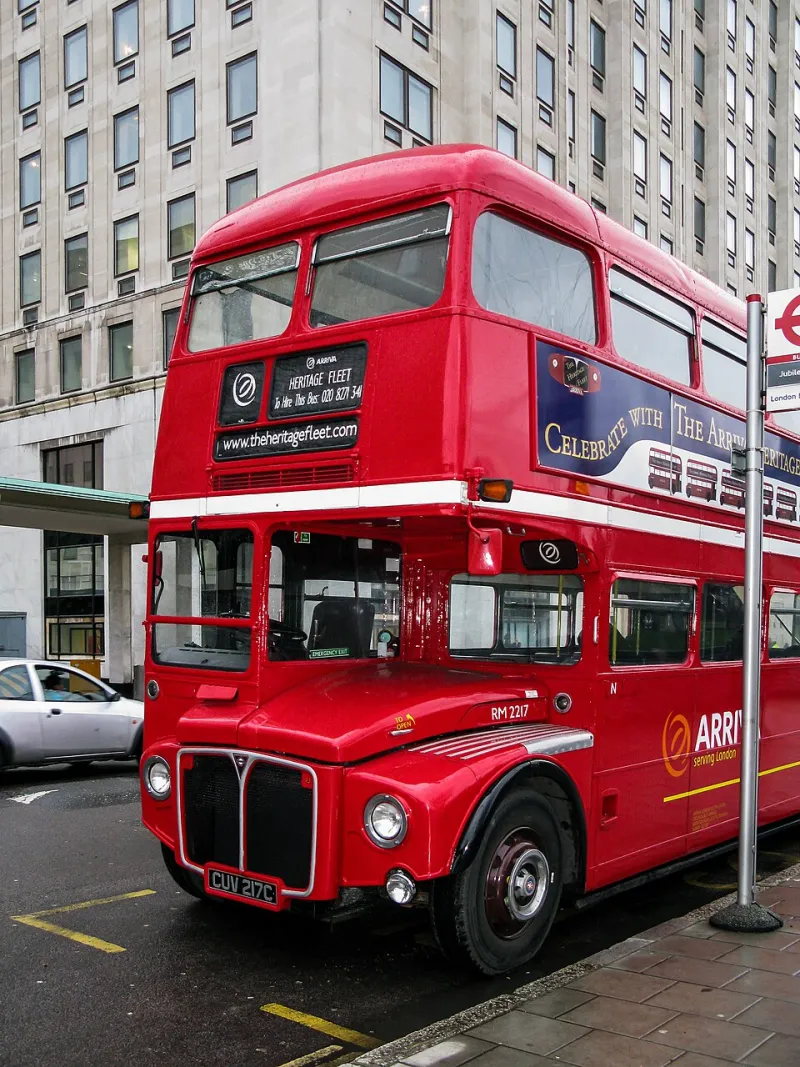
Photo: Dietmar Rabich, CC BY-SA 4.0, via Wikimedia Commons
On a damp Tuesday morning at the Broadway stop, the 102 arrives four minutes late and two passengers deep in a familiar ritual: one checks the app, one sighs, and both get on anyway. It is easy to make the 102 a punchline. It is harder to explain why, for a lot of people in Muswell Hill, it remains the difference between a manageable day and a stressful one.
The route has a reputation. Ask around and you will hear about the bus that vanishes, the one that crawls, the one that turns up in a convoy of three. But the people who use it every day describe something more nuanced: a service that is often decent, occasionally excellent, and too often let down by the same handful of pinch points. This is not a grumble. It is a request for something better.
The sigh that greets the 102
Part of the problem is expectation. The 102 threads through some of north London's most awkward junctions, linking Muswell Hill with East Finchley, Golders Green, Palmers Green and onward towards Edmonton. It is not a straight line. It is a bus that has to be patient so that the rest of us can get where we are going.
'People joke that the 102 is a myth,' says Maria, a teaching assistant who catches it from Muswell Hill most weekdays. 'But I rely on it. When it works, it is brilliant. When it doesn't, my whole morning falls apart.' She is not alone. At the stop, a retired teacher called Alan tells me he uses the route to get to hospital appointments. 'I plan an hour of buffer,' he says. 'That is not because the bus is always terrible. It is because I cannot afford to be late.'
What passengers actually tell us
The complaints are rarely about the idea of the bus. They are about information and reliability. The countdown screen says two minutes, then six, then two again. A bus is shown as 'due' long after it should have sailed past. Passengers learn to read the road instead: the slight rise in the distance, the red shape at the lights, the driver who knows the regulars.
There is also the question of crowding. At peak times, the 102 can feel like a moving common room — school bags, shopping trolleys, commuters pinned against the doors. Off-peak, it can be a pleasant way to cross the hill. The inconsistency is the issue. A service that is sometimes a delight and sometimes a lottery is hard to trust.
The view from the driver's cab
Drivers, unsurprisingly, have a different angle. One driver, who has worked the route for more than a decade, tells me the biggest frustration is not the passengers but the traffic. 'You can have a perfect bus and a perfect timetable,' he says. 'Then you hit the same junction at the same time as everyone else and the whole thing unravels.' He would like to see better bus priority at key points, clearer information for passengers when there is disruption, and somewhere decent to take a break at the ends of the route.
That last point matters more than it sounds. A tired driver is not a safe driver, and a rushed turnaround is not a reliable one. The 102's reputation is built in the gaps between trips as much as on them.
Business along the route
Local businesses feel the rhythm too. A shopkeeper near the Broadway, who asks not to be named, says the bus brings footfall but also uncertainty. 'People will not wait twenty minutes for a bus if they are carrying heavy shopping,' she says. 'They will go home and order online.' That is not a reason to blame the 102. It is a reason to make it dependable.
For Muswell Hill Journal 24, the point is not to defend a route blindly. It is to say that the 102 is part of the neighbourhood's infrastructure, and infrastructure deserves investment, not just eye-rolling. The people who use it are not asking for perfection. They are asking for a bus that turns up, that is not dangerously full, and that tells them the truth about when it will arrive.
What a fairer service would look like
So here are five constructive suggestions, drawn from passengers, drivers and the people who run shops along the route.
-
Bus priority where it counts. Not everywhere, but at the junctions where the 102 reliably loses time. A few hundred metres of priority can protect the timetable for the rest of the journey.
-
Honest real-time information. If a bus is cancelled, say so. If it is delayed, say why. Passengers can handle bad news; they cannot handle being told a bus is two minutes away when it is not.
-
Better waiting environments. Seats, shelter and lighting at the busiest stops. Small things, but they change the experience of waiting, especially for older passengers and parents with buggies.
-
A proper turnaround facility. Give drivers somewhere to rest and use the toilet between trips. Reliability starts with the people in the cab.
-
A regular user panel. TfL and the operator should meet passengers and local businesses quarterly, not just when something goes wrong. The 102 has a lot of expert users. Listen to them.
None of this is revolutionary. It is the sort of commonsense investment that makes a bus route feel like a public service rather than a test of endurance. The 102 is not a punchline. It is a lifeline. And in 2026, it deserves to be treated like one.