Kerb Your Enthusiasm: An N10 Case for Clearer Pavements
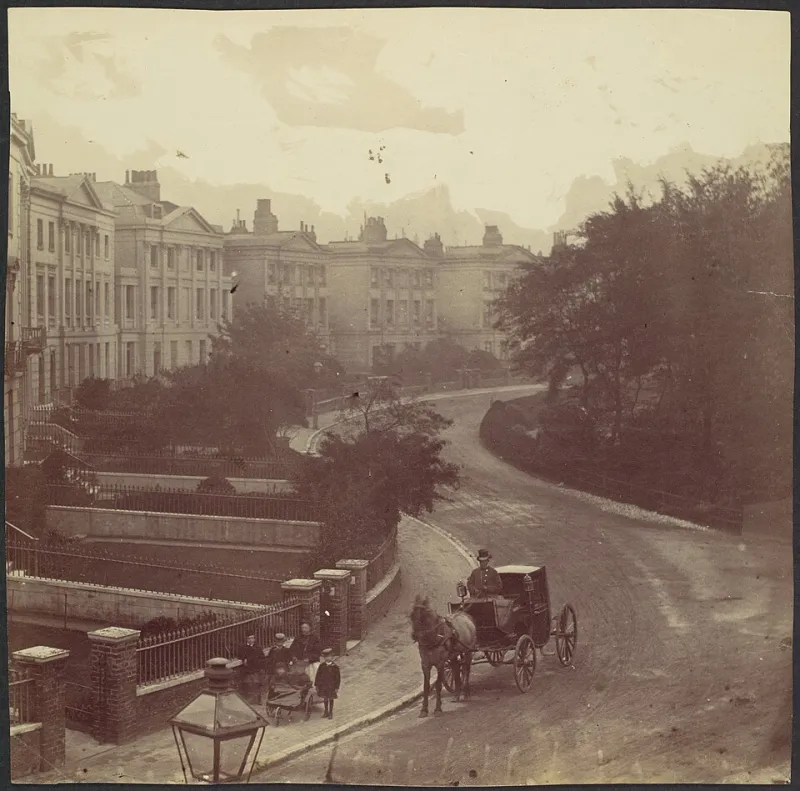
Photo: Unknown authorUnknown author, CC0, via Wikimedia Commons
Muswell Hill has a pavement problem that is not really about pavements. It is about the hundred small decisions made every morning on Fortis Green Road, the Broadway and the residential streets in between. A van stops for two minutes. A car edges onto the kerb so another can pass. A wheelie bin is left out until Thursday. A buggy has to go into the road to get past a builder’s pickup. None of these decisions is dramatic. Together they make walking in N10 feel like a negotiation.
I am not anti-car. I am not anti-van. I am anti the assumption that the kerb is a flexible extra lane for whoever needs it most. The kerb is the bit of the street that belongs to everyone, including people on foot, people with wheelchairs, people with buggies, children on scooters and anyone who has ever tried to get to the bakery without stepping into traffic.
The daily squeeze
The school-run hour is the obvious pinch point. Drop-offs near the primary schools produce a short, intense burst of stopping, reversing and door-opening. The same happens outside the Broadway at opening time, when delivery vans unload crates and pallets. Later, the bins appear. Then the evening school run. Then the takeaway vans. By 6pm, a narrow street can feel like a obstacle course designed by someone with a grudge against ankles.
What is frustrating is that most of it is avoidable. Not all of it, but most. A van driver who cannot find a loading bay is not the villain. A parent who is running late is not the villain. The problem is that there is no shared expectation of what to do when the kerb is busy. So everyone improvises, and the person on foot gets squeezed.
What the kerb is actually for
In London, pavement parking is not a free-for-all. There has been a general restriction for decades, with exceptions where councils allow it. But enforcement is patchy, and the rules can feel like local folklore. In Muswell Hill, the practical question is not what the law says in theory. It is what happens on a wet Tuesday when a delivery van blocks the only dropped kerb for fifty metres.
The answer, too often, is that someone waits. Or someone steps into the road. Or someone gives up and drives. That is not a transport policy. It is a daily tax on the most vulnerable pavement users.
What neighbouring boroughs have tried
Haringey, Barnet and Enfield have all wrestled with this. The approaches vary: clearer double yellow lines and keep-clear markings; bollards and planters at problem corners; targeted enforcement during school hours; and consultations on pavement parking controls. None of it is magic. Bollards can make a pavement harder to sweep. Planters need maintenance. Enforcement without explanation can feel like a revenue exercise. Consultation without action can feel like a waste of everyone’s time.
But the direction of travel is clear. The boroughs that have made progress tend to do three things at once: they make the rule visible, they make the alternative practical, and they enforce consistently. A sign alone does nothing. A loading bay that is always full is not an alternative. A warden who appears once a month is not enforcement.
A kerbside etiquette for N10
This is not a legal code. It is a set of habits that would make the street work better for everyone.
- If you are dropping off, use a designated bay or stop where the kerb is not needed for access. Do not park across a dropped kerb, even for a minute.
- If you are delivering, put the hazard lights on and move as soon as you can. Do not turn a two-minute stop into a twenty-minute break.
- If you are a household with bins, bring them in as soon as they are emptied. A bin left out for three days is not a bin. It is street furniture.
- If you are walking, do not assume the pavement is yours alone. But do not apologise for needing it either.
- If you see a problem that repeats every day, report it with a photo and a time. Councils respond to patterns, not one-off grumbles.
The honest caveat
There is no simple fix. Muswell Hill’s streets were not designed for the number of vans, cars and bins that now use them. The Broadway has limited loading space. The residential streets are narrow. The school run is real. The delivery economy is real. Any serious attempt to clear the pavements has to acknowledge that people still need to stop, load and unload.
But acknowledging a problem is not the same as accepting it. The kerb is not a car park. It is not a storage unit. It is not a temporary driveway. It is the line between the road and the place where people live. If we can agree on that, we can start to agree on what to do when the next van pulls up.
The small win
The first win is not a new bylaw. It is a shift in expectation. If enough people in N10 decide that blocking a dropped kerb is not a normal thing to do, the street changes. If enough people leave a note instead of a scratch, the conversation changes. If enough people tell the council which corner is worst, the enforcement changes.
Muswell Hill is a neighbourhood that notices things. It notices when the bins are late. It notices when a shop closes. It notices when a pavement is blocked. The next step is to notice the person who has to step into the road, and to decide that their route matters too.