The Convenience Gap: What N10 Does When Nature Calls
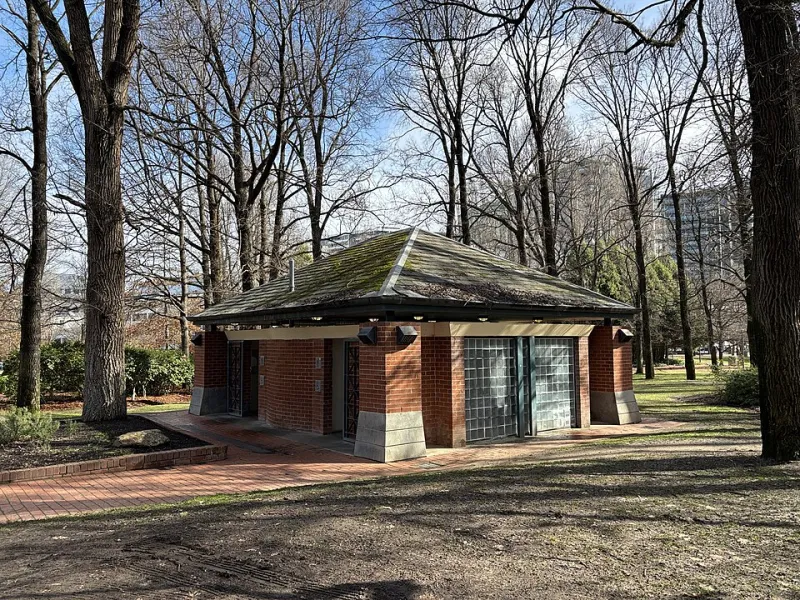
Photo: Nick-D, CC BY-SA 4.0, via Wikimedia Commons
There is a particular kind of walk you do in Muswell Hill when you are not really walking anywhere. It is the brisk, slightly panicked circuit around the Broadway, eyes scanning for a sign that says Public Conveniences and finding, instead, a estate agent, a bakery, a barber and a bin. For most of us it is a minor inconvenience. For an older resident, a parent with a buggy, a delivery rider or a visitor who has just got off the 144, it can shape the whole afternoon.
This is not a story about a missing door in the dramatic sense. Nobody has stolen a public toilet in the night. It is a story about a gap in the map — the quiet, ordinary infrastructure that a neighbourhood either has or does not have, and what people do when it does not.
The Broadway: A Gap in the Map
Start at the top of the Broadway, near the bus terminus, and work your way down. There are plenty of places to spend money and several places to sit, but no council-run public toilet that I could find. The library on Queens Avenue is a reliable dash, though opening hours are not the same as bladder hours. The cinema is a lifesaver if you are seeing a film, less so if you are not. The pubs are welcoming if you are buying a drink, and the cafes are welcoming if you are buying a coffee.
That is the unwritten tax of the high street: the purchase that buys you peace of mind. A flat white becomes a loo token. A pint becomes a permit. Nobody minds too much — this is how lots of London neighbourhoods work — but it does mean that access depends on confidence, cash and a certain amount of social nerve. Not everyone has all three.
Parks: The Seasonal Loophole
Priory Park and Alexandra Park are the neighbourhood's lungs, and in summer they are also its informal answer to the conveniences question. In winter, though, the picture narrows. Gates close earlier, cafes keep shorter hours, and the walk from the middle of a park to a usable loo can feel a lot longer than it looks on a map. Queens Wood is glorious and utterly without a public toilet, which is fine if you plan ahead and less fine if you do not.
This is where the audit gets gently indignant. A park without a loo is not a failure of nature; it is a failure of furniture. We accept it because we are used to it, the same way we accept a bus shelter with no seat or a crossing that gives you nine seconds to cross four lanes.
The Cafe Tax and the Pub Politeness
Ask around and the workarounds come thick and fast. There is the cafe purchase, the pub politeness, the library dash, the department-store detour, the friend's flat on the way home. There is also the quiet calculation that many people with mobility issues make before leaving the house: do I go now, or do I risk it? That calculation is not a lifestyle choice. It is a barrier.
Parents know the buggy shuffle. Older residents know the route to the nearest reliable loo better than they know the bus timetable. Delivery riders know which businesses will nod them through and which will not. The neighbourhood is full of small, unspoken agreements that keep people moving. They are generous agreements, but they are not a system.
What a Small Facility Would Actually Cost
Here is the part where the conversation usually stalls: money. A single accessible toilet pod, installed and connected, can land somewhere in the region of £60,000 to £120,000 at 2026 prices, depending on drainage, power and the amount of pavement you have to dig up. Running costs — cleaning, maintenance, consumables, unlocking and locking — can sit in the low tens of thousands a year. That is not nothing. It is also not the price of a hospital wing.
There are cheaper models. A community toilet scheme, where businesses open their loos to the public in exchange for a small council payment or a sticker in the window, has worked elsewhere. A seasonal facility in Priory Park or near the Broadway could take pressure off the summer months. A single well-placed accessible loo, open seven days a week, would not solve every problem, but it would remove one very specific daily obstacle for a lot of people.
The Workarounds We Have Normalised
The strange thing is how normal it all feels. We have built a neighbourhood where the answer to a basic human need is a scavenger hunt. We have done it without anyone deciding to do it. That is how infrastructure gaps usually happen: not with a bang, but with a thousand small workarounds.
The case for a public toilet in N10 is not really about tourists or day-trippers, although they would benefit. It is about the older resident who cuts her walk short. The parent who plans her errands around a cafe stop. The teenager who does not want to ask. The visitor who does not know the code. A neighbourhood that is good to walk around is a neighbourhood that lets you stop.
A Modest Proposal
So here is a modest proposal for 2026: put the loo on the map. Not as a grand scheme, not as a headline-grabbing pledge, but as a piece of civic furniture as ordinary as a bench or a bin. Ask the businesses who already act as informal toilets whether they would join a formal scheme. Look at the parks and the library and the cinema and see where a single accessible pod could go. Cost it properly, publish the number and let residents see it.
Muswell Hill is good at small, practical kindnesses. We queue, we lend, we salt the steep streets and we keep an eye on each other. A public toilet is just that instinct made concrete — or, more accurately, made porcelain. It is not glamorous. It is not a regeneration strategy. It is a door that opens when you need it.
If you know a public loo we have missed, or a business that quietly lets people use theirs, tell us. The map is not complete until the neighbourhood fills it in.