The Gaps Between the Lights: Counting Muswell Hill’s Empty Shopfronts in 2026
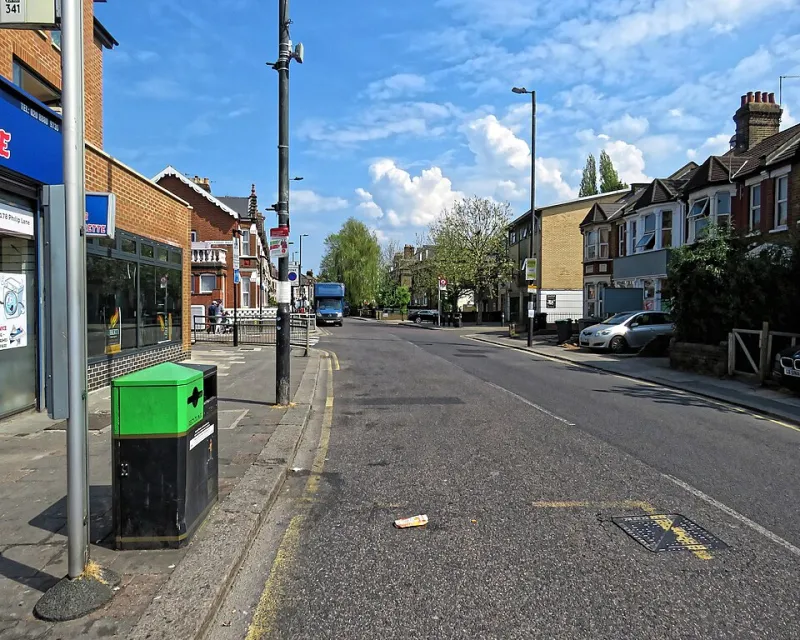
Photo: Acabashi, CC BY-SA 4.0, via Wikimedia Commons
On a damp Tuesday morning, the Broadway does what it always does: it keeps moving. Buses sigh past the cinema, someone wrestles a buggy around a sandwich board, and the smell of coffee drifts out of a doorway. But look up from the pavement and you start to notice the pauses — the shopfronts with nothing behind the glass, the letters faded where a name used to be, the paper taped inside the window with a letting agent’s number printed too small.
This is not a story about a dying high street. It is a story about a street with gaps in it. Over three mornings in early November 2026, Muswell Hill Journal 24 walked the Broadway from the cinema end towards the roundabout, then back along the other side, counting empty ground-floor units and asking what happens next. The result is less a scandal than a slow, practical puzzle: who looks after the spaces between the lights?
What we counted
Our informal audit found at least eight clearly vacant ground-floor units along the Broadway and its immediate side streets. Five were openly advertised, with the usual laminated particulars and a phone number that leads to a call centre. Two were shrouded in brown paper or dusty blinds, giving little away. One appeared to be in a state of half-fit-out limbo — lights on, no shelves, no sign, no explanation.
The longest-standing gap sits on the stretch between the cinema and the Green. Its windows have been empty since before the pandemic changed the rhythm of the street, and the paint on the frame has started to blister. A neighbouring shopkeeper says the unit has had ‘more viewings than a rental flat’ but no deal that sticks. Further north, near St James’s Lane, a former service unit has been empty for several months; its doorway collects leaves and the occasional flyer for a gym that may or may not still exist.
None of this is unique to N10. High streets across London have been reshaped by online shopping, rising costs and the long tail of changed commuting habits. But Muswell Hill has a particular feel — village-ish, independent-minded, proud of its cinema and its cafés — and empty frontages interrupt that story. They are not just commercial holes. They are daily reminders that the street is not quite finished.
The view from the neighbouring counters
Ask the people running the shops next door and you get a mix of pragmatism and mild frustration. A bookseller on the Broadway says the empty unit beside them has become a kind of unofficial bench. ‘People sit on the step at lunchtime,’ they say. ‘I don’t mind. But it does make the parade feel tired when the window is grey.’
A café owner a few doors down is more direct. ‘We all pay rent on time and we all sweep our bit of pavement,’ she says. ‘When a unit stays empty, the litter gathers, the pigeons move in, and suddenly the whole row looks like nobody cares. It affects trade. Not massively, but it does.’
There is also a quieter cost. Several independents mentioned that gaps break the habit of browsing. If three shops in a row are closed, a would-be customer walks faster. They go to the supermarket, or order online, and the street loses a small piece of its daily footfall. ‘You need a critical mass of reasons to come out,’ says the owner of a small homeware shop. ‘Even a pop-up helps. It gives people a destination.’
What the agents and landlords say
Letting agents tend to frame the issue in terms of calibration. One agent, who asked not to be named, said the Broadway remains desirable but that rents and business rates have not always adjusted to the reality of smaller operators. ‘Landlords want a reliable tenant on a decent lease,’ they said. ‘Sometimes that means waiting. Sometimes it means refurbishing. It is not always as simple as sticking a sign up.’
Another agent pointed to the cost of bringing older units up to standard — new electrics, fire compliance, accessibility, extraction if it is a food use. A unit that looks ready from the pavement can need tens of thousands of pounds of work before a keys handover. That calculus helps explain why some gaps linger even when there is interest.
Haringey Council’s high street team did not provide a specific comment on individual units, but the broader policy direction is familiar: support for meanwhile uses, simplified change-of-use routes where appropriate, and encouragement for landlords to engage with community groups. The detail, as ever, is in the paperwork.
Could pop-ups, repairs or a change of use help?
Yes — but not as a single magic fix. Short-term pop-ups are the most visible option. A three-month lease for a maker’s market, a seasonal gift shop or a community exhibition can put light back in a window and people back on the pavement. The risk is that pop-ups can feel like a revolving door: lively for a fortnight, papered up again by spring.
Repairs matter too. A clean window, a working light and a tidy doorway change how a unit reads. Several locals said they would rather see a landlord spend a little on presentation than leave a property to look abandoned. ‘Even a coat of paint says someone is paying attention,’ one passer-by told us.
Change of use is the longer game. Some units may work better as a small clinic, a studio, a tutoring space or a service business rather than another retail shop. That will not suit every parade, and it will not please everyone. But pretending that every empty shop must become a shop is part of what keeps them empty.
The street as a shared habit
Walking back towards the cinema, the Broadway feels less like a problem to be solved and more like a habit that needs tending. The filled units are not just businesses; they are reasons to leave the house, to bump into a neighbour, to notice the season change in a window display. The empty ones are not failures, exactly. They are invitations to ask better questions about rent, repair and what a high street is for in 2026.
For now, the gaps wait. Some are patient. Some are scruffy. All of them are part of the view. The least we can do is look properly — and keep asking who is looking after the spaces between the lights.