When the Sun Clocks Off: The Window Dressers Keeping the Broadway Lit
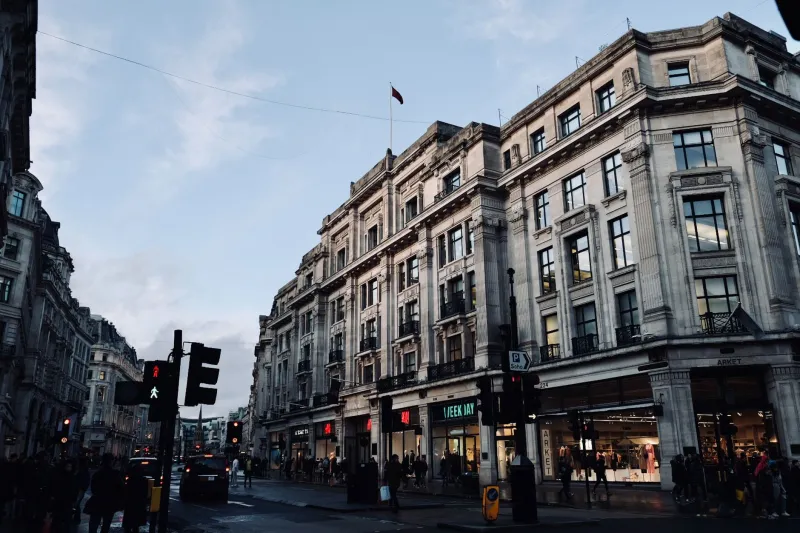
At 4.07pm on a damp Tuesday, the Broadway does a quiet costume change. The sky over Alexandra Palace turns the colour of wet slate, the buses flick their headlights on, and one by one the windows decide to become lamps. It is not the full Christmas switch-on yet. It is something smaller and more interesting: the early-dark display, the November glow that independent shopkeepers build for the hours when most of us are walking home rather than shopping.
On 9 November 2026, the sun is long gone by the time school pick-up finishes. The high street knows this. A deli counter near the top of the Broadway has a row of warm bulbs tucked behind jars of marmalade. A florist has propped two jam jars of battery lights among the dried stems. The bookshop has gone for a single Anglepoise in the window and a hand-lettered card that says, simply, 'Come in, it's grim out there.' It is hard to argue with the copywriting.
The first switch-on
Most of the displays did not appear overnight. Shopkeepers started thinking about them in late October, usually in the week when the clocks went back. The pattern is familiar: take down the autumn leaves, clean the glass, find the box of lights in the stockroom, discover that half the bulbs have died, and make a decision about whether this is the year to finally buy a timer plug.
'You want it to look like you've made an effort without looking like you've spent a fortune,' says the owner of a small homeware shop on Fortis Green Road. She has been dressing her window for eleven winters and still keeps a notebook of ideas. This year it is a papier-mâché moon, a length of dark blue fabric and a borrowed wooden ladder. The moon took two evenings. The ladder took one phone call to a neighbour.
The early-dark window is not the same as the Christmas window. Christmas is allowed to be loud. November is quieter, more practical. It has to work at 4pm and at 7pm, in rain and in the kind of low grey light that makes glass behave like a mirror. It has to be visible from a bus. It has to survive a delivery van reversing too close to the kerb. And it has to say something about the shop that the sign above the door cannot.
A window is a small stage
There is a craft to this, even when the budget is small. Owners talk about sightlines, glare and condensation. They move a display three inches to the left because the streetlight outside creates a hot spot. They learn that fairy lights look warmer when they are not all the same colour temperature. They discover, usually the hard way, that a hand-painted winter scene on the inside of the glass will be invisible from the pavement if the shop behind it is too bright.
There is also a friendly arms race. Nobody admits to competitive window dressing, and then somebody mentions that the shop two doors down has built a whole miniature ski slope out of white cardboard and a bag of icing sugar. 'It's not a competition,' one bookseller says, before adding, 'but I did go back and redo my snow.'
The best windows in Muswell Hill this month are not the most expensive. They are the ones that look as if a person made them. A hardware shop has arranged secateurs, string and a pair of boots around a chalkboard that reads 'For the garden you'll get to at the weekend.' A bakery has hung a single string of lights in a jam jar and left it at that. The effect is less 'retail experience' and more 'someone is in, and they are pleased to see you.'
The cost of a glow
In 2026, the economics of a shop window are not straightforward. LED bulbs are cheap to run, but time is not. A modest display can take two evenings to build and another hour a week to keep tidy. Props need storing. Vinyl lettering needs replacing. Insurance and fire safety rules mean that not every romantic idea involving candles or old paper lanterns makes it past the risk assessment.
Several owners mention the same trade-off: the window has to earn its keep. That does not mean it has to sell something directly. It means it has to make the shop feel open, alive and worth a detour. 'You can't sell a jumper through glass,' says one clothing shop owner on St James's Lane. 'But you can sell the idea that someone's in. That's half the battle when it's dark and people are walking fast.'
The other cost is electricity, though most owners say the lights are a small part of the bill compared with heating or refrigeration. The bigger worry is the feeling that a high street has to keep performing. Windows are not just decoration; they are part of the rent. A bright window suggests a business that is still betting on the street. A dark one suggests the opposite, even when the reasons are more complicated.
Does it actually make us shop?
This is the question nobody can answer with a spreadsheet. Owners report more people pausing, more people coming in 'just to look', and more conversations that start with the weather and end with a purchase. But they also know that a glowing window does not compete with a phone screen. In 2026, browsing happens everywhere. The high street has to offer something the algorithm cannot: a door you can push, a face you can talk to, and a reason to leave the house when it is already dark.
The glow helps with the first two. It gives permission to linger. It makes the pavement feel less like a corridor and more like a place. Parents with buggies stop to look at the papier-mâché moon. Dog walkers double back. A teenager takes a photograph of a window that has been arranged to look like a tiny sitting room, complete with a lamp and a stack of books. None of that is a sale, but it is a habit. And habits are what keep a high street alive.
There is also the civic side. A lit window makes the walk from the bus stop feel safer. It gives the Broadway a bit of shape after dark. It tells people that the neighbourhood is still awake. Several shopkeepers mention this without being asked, which suggests it matters more than the retail maths. 'It's not just for customers,' says one deli owner. 'It's for everyone who walks past. You want the street to feel like it's still on.'
Light as a civic habit
None of this is a cure for the bigger questions. Rents, parking, deliveries, business rates and the slow shift of shopping habits do not disappear because a florist has hung up a string of warm bulbs. A window display cannot fix a leaky roof or a bad lease. But it can change the mood of a street, and mood is not nothing.
At 4.45pm, the Broadway is full of small theatres of light. The deli counter glows. The bookshop lamp is on. The hardware shop chalkboard has been turned slightly so it catches the eye of anyone coming down from the cinema. A man in a raincoat stops outside the bakery, looks at the jam-jar lights, and goes in. It is not a scientific sample. It is just a Tuesday.
As the shops begin to close, the windows keep working. They are not open, exactly, but they are still saying something. The early dark is not going anywhere. The least Muswell Hill can do is make it look like somebody is home.