The 2pm Screen: Sofa Seats, Small Talk and the Weekday Regulars Keeping Muswell Hill's Cinema Warm
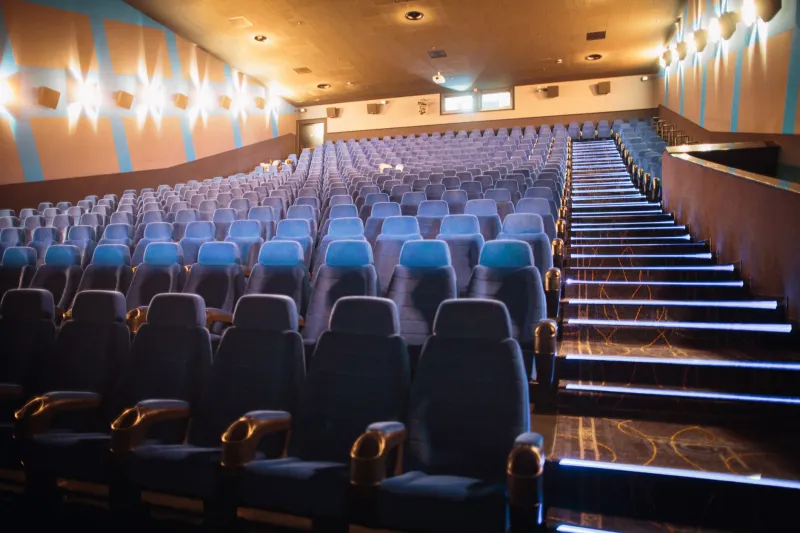
At 2.05pm on a Monday in November 2026, the cinema just off the Broadway is doing a quiet trade in small comforts. The rain has stopped, the pavement outside is still dark, and the ticket desk is staffed by one person who seems to know most of the people in the queue by name. A man in a cycling jacket buys a coffee and a ticket for the 2.15. A woman with a folded copy of the local paper asks whether the subtitles are on. Two friends in their seventies arrive separately, spot each other, and settle into adjacent seats as if they had booked them a week ago. The screen is maybe a third full. Nobody seems to mind.
This is the Monday matinee, a ritual that rarely makes headlines. In 2026, when so much of local life is measured in footfall, app bookings and evening trade, the weekday afternoon screening is easy to overlook. But spend a few hours in the auditorium and you start to see it as something else: a low-key piece of neighbourhood infrastructure, as useful in its way as a library table or a bench on the Broadway.
A different sort of rush hour
Peak time at the cinema is usually imagined as Friday night: queues, popcorn, the small panic of finding your seat in the dark. The 2pm crowd has its own rhythm. It includes retirees who no longer want to drive home after a late showing, freelancers stealing an afternoon back from their laptops, shift workers killing time before a night on the wards, and the occasional pair of friends who have decided that this is cheaper and calmer than lunch. The common thread is not age. It is time. They are here because 2pm is when they can be.
Not everyone in the room is lonely. Some are simply off duty. But loneliness is part of the picture, and the matinee meets it without making a fuss. There is no pressure to chat, no expectation to stay for a coffee, no awkwardness about sitting alone. You buy a ticket, choose a seat, and become part of a temporary audience. For two hours, the room asks nothing of you except that you watch.
The regulars in row F
Margaret, who has lived off Colney Hatch Lane for four decades, comes most Mondays. She prefers the aisle seat near the back and brings a small flask in her bag. She told me she started coming after her husband died, not because she could not bear the empty house, but because she liked having somewhere to be. 'It is two hours where I do not have to decide anything,' she said. 'I just sit down and the film does the rest.'
Then there is Tom, a nurse who works nights at a hospital further into town. He catches the Monday matinee because it is the only screening that fits between sleep and a shift. He sits near the front, phone off, coat folded on the seat beside him. He does not care much what is showing. 'It resets my head,' he said. 'I do not need a big film. I need a dark room and a story that is not mine.'
Behind the counter, Priya has worked at the cinema for six years. She says the weekday crowd is the most polite audience of the week. They queue patiently, they put their rubbish in the bin, and they notice when the heating is on the blink. 'Evening audiences are louder,' she said. 'Afternoon audiences are more like neighbours. They ask how you are. They remember your name.'
The matinee economy
After the credits, the neighbourhood reasserts itself. People drift out into the late afternoon and split in different directions: some towards the Broadway for a paper or a loaf, some to the bus stop, some to a café that is still quiet before the school pick-up. The cinema is an anchor, but not in the grand sense. It does not fill the high street on its own. It brings a trickle of people past the shops at a time when many high streets are otherwise still.
Local businesses know this. The café two doors down sees a small bump on Mondays, mostly tea and toast, occasionally a slice of cake. The newsagent sells more than it might otherwise. None of it is a transformation. It is a trickle, and trickles matter. A ticket stub is also a permission slip: to linger, to buy a coffee, to run an errand, to sit for a while instead of rushing home.
The case for a half-empty screen
Half-empty rooms are often treated as failure. In cinema, as in so much of local life, the assumption is that busy equals good and quiet equals struggling. But not every good thing needs to be full. A cinema at 2pm on a Monday is a reminder that public life includes low-stakes, low-volume spaces: the swimming pool at 7am, the library on a Wednesday, the church hall that opens for tea. These places are not glamorous. They are simply available.
Could the Monday matinee be busier? Of course. Better marketing, cheaper tickets, a familiar film, a dry day. But the value is not only in the number of bottoms on seats. It is in the fact that the seats are there, warm and available to whoever needs them at an odd hour. In a neighbourhood that is changing fast, that counts for something. It is a small civic kindness, offered weekly, without a ribbon-cutting.
At 3.55pm, the lights come up and the small crowd stretches. Margaret folds her coat over her arm. Tom checks his phone and heads for the door. The screen goes dark, the staff reset the auditorium, and outside the Broadway is getting ready for the school pick-up. The Monday matinee is over for another week. It will be back next Monday, at 2pm, whether the screen is a third full or not.