Nine Chairs, Three Applications and a Fence: Inside the Meeting That Shapes N10
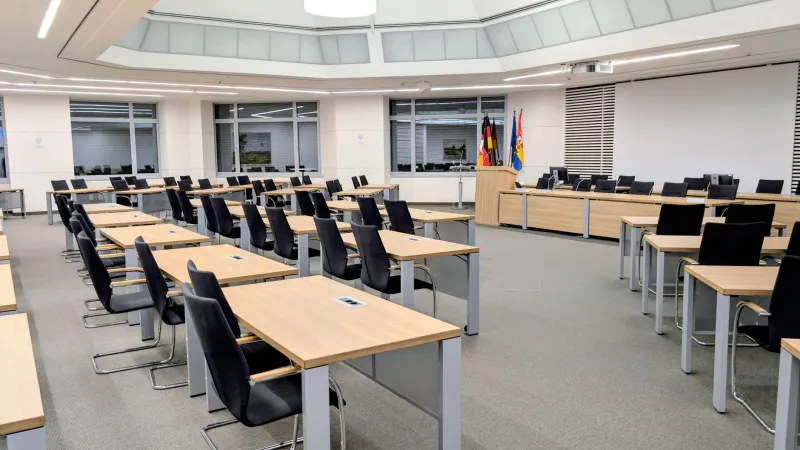
The room is not built for drama. Fluorescent strip lights, a water jug with a missing lid, nine chairs behind a long table and a public seating area that could comfortably host a small birthday party. On the third Thursday of the month, this is where N10 gets built — or at least where the loft conversions, shopfront tweaks and garden walls that reshape it get their moment in the spotlight.
Planning committees have a reputation for being dry. They are dry. But they are also the most underrated civic night out in Muswell Hill. Forget the Broadway on a Saturday; the real spectator sport is a room full of councillors, officers and one very determined neighbour trying to work out whether a dormer window constitutes harm to the character of the area.
The papers land before the argument does
By the time the meeting starts, the agenda has been online for a week. Each application comes with an officer's report — a few pages of planning jargon, policy references and a recommendation. Most people skip straight to the bottom line: approve, refuse or defer. The committee, to be fair, does not. They ask about overlooking distances, extraction noise, boundary treatments and whether a condition is enforceable. It is not theatre, but it is not nothing either.
On this particular evening, three N10 applications make the cut. A rear dormer off Fortis Green Road, an extraction flue at the back of a Broadway takeaway, and a fence that has divided two neighbours on a residential street near the park. Each one is small in the grand scheme of things. Each one matters enormously to the people sitting in those chairs.
Application one: the dormer that almost slipped through
The first case is a loft conversion with a rear dormer. The applicant's agent describes it as modest, in keeping, and barely visible from the street. A neighbour disagrees. She has brought photographs — printed, annotated, held up at the back of the room — showing the view from her bathroom window. The dormer, she says, would look straight into it.
The committee asks about obscure glazing. The officer confirms a condition can be attached. The agent shifts slightly. The neighbour asks whether the window could be moved. The chair explains that the committee can only decide what is in front of it, not redesign the scheme on the hoof.
In the end, it passes with conditions: fixed obscure glazing, no additional openings, a restriction on the roof material. It is the kind of decision that will never make headlines, but it is exactly how a neighbourhood changes — one window at a time, with a condition tucked into the paperwork.
Application two: the flue that went back to the drawing board
The takeaway flue is messier. An extraction unit at the rear of a Broadway business has been the subject of complaints about noise and smell. The applicant wants retrospective approval. The officer's report recommends a time-limited permission with a noise assessment condition. Residents who live in the flats behind are not convinced.
One speaks about summer evenings with the windows shut. Another mentions a low hum that starts at 11pm and stops when the shop closes. The applicant's representative says the unit has been serviced and that a new silencer is on order. The committee asks how the council will monitor it. The officer admits enforcement is stretched.
The committee defers the application. Not a refusal, not an approval — a request for more information on noise mitigation and a clearer maintenance schedule. The residents leave looking cautiously pleased. The applicant's agent leaves looking at his phone. It is not a victory for anyone, but it is a pause. In planning, a pause is often the most honest outcome available.
Application three: the fence that stopped being about the fence
By the time the fence case comes up, the room has thinned out. Two neighbours sit on opposite sides of the public seating. The fence is 2.1 metres high, in a conservation area, and has been up for eight months. One says it blocks light and feels oppressive. The other says it provides privacy and that the height was agreed informally before it went up.
The committee asks about the conservation area designation. The officer confirms that the fence requires permission because of its height and location. The applicant says he did not know. The neighbour says she told him. The chair gently moves things back to policy.
After a short discussion, the committee refuses permission. The fence will have to come down or be reduced. The applicant shakes his head. The neighbour says nothing. Outside, on the pavement, they walk in opposite directions. It is a small, sad, utterly ordinary scene — and it is exactly why these meetings exist.
The bit nobody claps for
Here is the useful part. If you care about any of this, you do not need to wait for the third Thursday. Every application in Haringey is listed on the council's planning portal. You can search by street, by ward, by application number. You can read the officer's report before the meeting. You can comment during the consultation period — usually 21 days, sometimes longer — and your comment becomes part of the file.
If you want to speak at committee, you need to register by the deadline, which is usually a couple of working days before the meeting. You get a few minutes. You are asked to stick to planning matters, not personal grievances. It is worth doing. Committees notice when the public turns up, even if they do not always say so.
The room will never be full. Nine chairs, a water jug, a few familiar faces. But it is where the neighbourhood's next chapter gets written, one dormer, one flue and one fence at a time. The next meeting is on the third Thursday. The agenda will be online a week before. You could go. You might even enjoy it.