The In-Between Ways: Muswell Hill's Unlisted Footpaths and the People Who Keep Them Alive
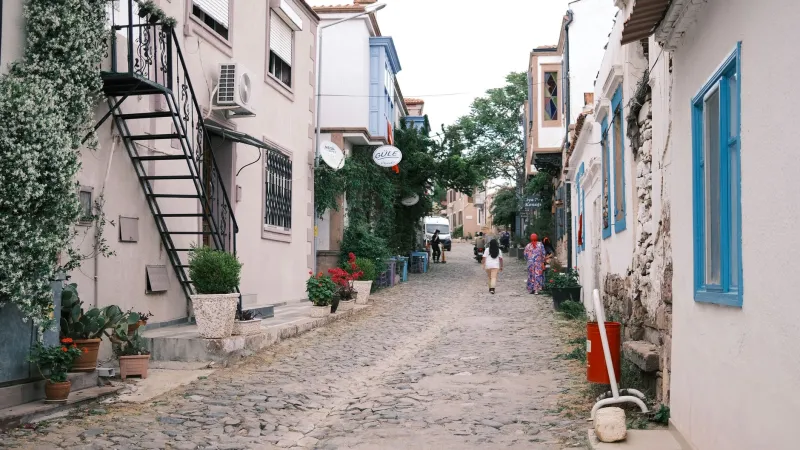
There is a version of Muswell Hill that exists only on foot. It is not the Broadway with its coffee queues and bus stops, nor the tidy stretch of Muswell Hill Road where everyone slows for the crossing. It is the stuff in between: the narrow passage beside a row of shops, the steps that drop away between two houses, the gated lane that looks private until you notice the worn patch in the middle where a thousand shoes have landed.
Ask five N10 residents for their favourite shortcut and you will get five different answers, plus at least one heated debate about whether the steps by the park really count. These routes are not secret in the sense of being unknown. They are secret in the way that a good local knows them and a visitor walks straight past. They do the quiet work of the neighbourhood: getting children to school, posties to front doors, dog-walkers to Alexandra Park and commuters to the bus stop before the rain sets in.
The routes that do the quiet work
On a damp Tuesday in 2026, the in-between ways are easy to spot once you start looking. There is the alley behind a parade of shops on the Broadway where delivery drivers wheel cages and residents nip through with reusable bags. There is the flight of steps off Dukes Avenue that turns a long bend into a two-minute descent, and the path near St James's Lane that smells of wet leaves and someone's woodsmoke. There are the gaps between streets that look like dead ends until you see a pedestrian gate, and the cut-throughs that link the top of the hill to the roads below without forcing you to walk the long way round.
Some are public highway. Some are permissive paths. Some are effectively neighbourhood agreements — a gate left unlocked, a step repaired by the person who lives nearest. That mix is part of why they feel like local knowledge rather than council infrastructure. It is also part of why they can be overlooked when budgets are tight and the list of urgent jobs gets longer.
Who actually uses them
I met a dog-walker called Ruth at the top of one such set of steps, waiting while a spaniel inspected a pile of leaves. She uses the route twice a day and has done for years. 'It is not faster, exactly,' she said. 'It is calmer. You are not standing at the kerb waiting for a gap.'
A postie with a trolley had a more practical view. Shortcuts save minutes, and minutes add up across a round. But they also come with hazards: uneven paving, overhanging branches, bins left out, the occasional patch of ice that nobody notices until someone goes down. 'You learn which ones are safe in the dark,' he said. 'And which ones you avoid when it has been raining for a week.'
Commuters use them to reach the bus routes without braving the Broadway crowds. Parents use them on the school run, often with a buggy in one hand and a scooter in the other. The routes are not just convenient. They are a kind of social glue: the same faces at the same time, a nod, a brief chat about the weather, a shared roll of the eyes when the bin lorry blocks the narrow bit.
The lighting question
Here is where the in-between ways get complicated. Ask whether they should be better lit, and you get a genuine split. Some residents say yes: a proper light, a clear sign and a swept path would make them safer for older people, night-shift workers and anyone walking home after dark. Others worry that better signage would turn a quiet local route into a thoroughfare, bringing litter, noise and the kind of anti-social behaviour that a dark alley currently discourages.
Haringey Council has a difficult job balancing those views. There is no single owner of the problem. A path can cross several land types, and responsibility can be split between highways, parks, housing and private frontages. In practice, the people who use a shortcut most often become its unofficial caretakers. They pick up the odd can. They report a broken step. They trim a branch that is blocking the way. It is civic-minded behaviour, but it is also unpaid and unevenly distributed.
What would help? A winter audit would be a start: checking lights, clearing leaves, fixing loose paving and making sure the most-used routes are passable after rain. Clearer information about who to report faults to would save residents time. And a conversation about signage that does not assume every path should be promoted — some are better left as local knowledge, provided they are safe.
A small ask for the in-between
Muswell Hill is good at celebrating its front doors, its shopfronts and its views. The in-between ways rarely get a mention. They are not photogenic. They do not host markets or quizzes. They just get people from one place to another without much fuss.
But on a dark November evening in 2026, when the Broadway is busy and the rain is coming sideways, that quiet shortcut matters. It is the difference between a ten-minute walk and a twenty-minute one. It is the reason a postie finishes on time. It is the reason a dog gets its second walk. If you use one daily, you probably already know its quirks: the step that is slightly too high, the puddle that never drains, the gate that sticks in the cold.
The least we can do is notice them. And, when the leaves come down or a light goes out, say something. The in-between ways are not on the map, but they are part of the neighbourhood all the same.